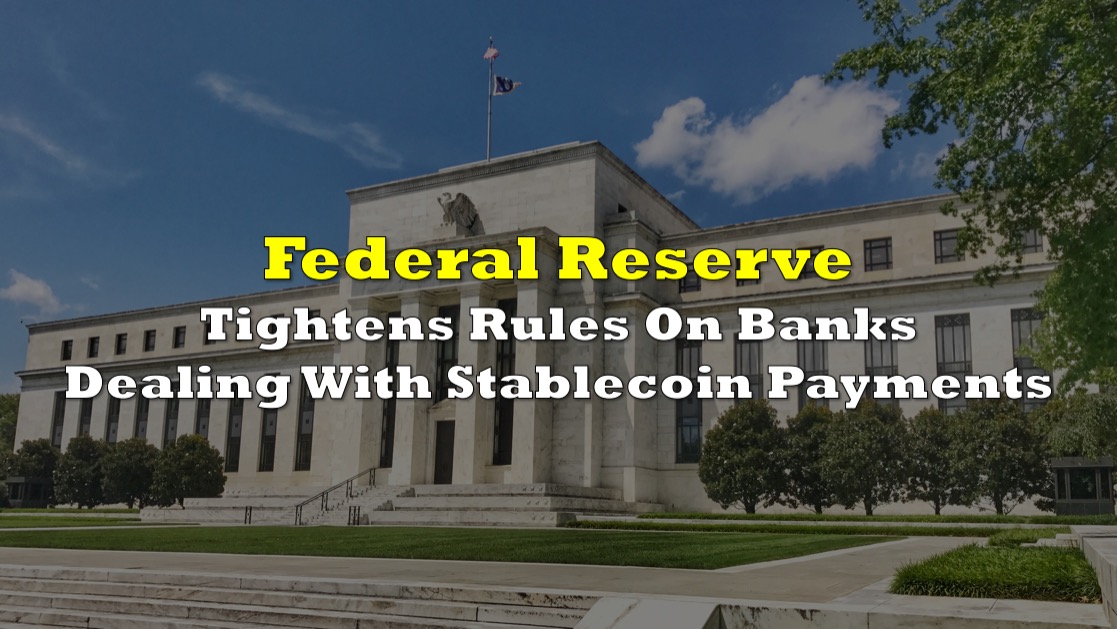

The Federal Reserve, in a significant move aimed at shaping the landscape of digital payment activities within the banking sector, has issued a comprehensive policy statement clarifying its stance on state member banks engaging in certain activities involving digital currencies, particularly dollar tokens.
The newly released policy statement addresses section 9(13) of the Federal Reserve Act and its implications for state member banks and their subsidiaries. In essence, the policy statement sets forth a presumption that the Federal Reserve will exercise its discretion to limit state member banks and their subsidiaries to engaging as principal in activities that are permissible for national banks. This approach aligns state member banks’ permissible activities with those of national banks, subject to the terms, conditions, and limitations placed on national banks engaging in the same activities.
“A state member bank seeking to engage in activities permitted for national banks… including issuing, holding, or transacting in dollar tokens to facilitate payments, is required to demonstrate, to the satisfaction of Federal Reserve supervisors, that the bank has controls in place to conduct the activity in a safe and sound manner,” the regulation said.
In order to confirm compliance with this prerequisite, a state member bank must obtain written confirmation of supervisory nonobjection from the Federal Reserve before commencing the intended activities. Banks intending to participate in these endeavors must also notify their designated Federal Reserve supervisory point of contact and provide a comprehensive description of the proposed activity. The staff will then evaluate the bank’s control framework and risk management practices before granting a written notification of supervisory nonobjection.
Among the risk management aspects the Federal Reserve will be looking at are:
- Operational risks encompassing governance, network oversight, and clarity regarding roles, responsibilities, and liabilities of involved parties. This extends to scrutiny of transaction validation procedures such as timing, final settlement, potential irreversibility, and the central authority governing transaction records.
- Cybersecurity vulnerabilities encompass risks linked to the underlying network facilitating dollar token transactions. This involves evaluating potential threats arising from smart contract usage and the incorporation of open source code.
- Liquidity risks involve assessing the potential for significant redemptions of dollar tokens within a condensed timeframe, leading to abrupt deposit outflows.
- Risks associated with illicit financial activities pertain to adherence to regulations like the Bank Secrecy Act and Office of Foreign Asset Control requirements. This encompasses customer identity verification, due diligence, and continuous monitoring for suspicious transactions.
- Consumer compliance risks include ensuring alignment with pertinent consumer protection statutes and regulations applicable to the specific dollar token activity.
This move comes at a time when digital payment mechanisms are gaining widespread adoption and attention. It reflects the growing recognition among regulatory authorities that digital currencies and related technologies have the potential to reshape financial services, necessitating a proactive approach to supervision and risk management.
This is noteworthy after payment platform PayPal recently released its own stablecoin digital currency named PayPal USD. This new offering, backed by Paxos Trust Company, is tethered to US dollars and is intended to facilitate seamless transactions within PayPal’s expansive online payment platform.
“This latest Federal Reserve supervisory letter mandates that state banks that are a members of the U.S. Federal Reserve system must obtain a written supervisory nonobjection from the Fed before issuing, holding or transacting in dollar tokens used to facilitate payments, such as stablecoins, precisely the kind of stablecoins that PayPal just rolled out,” commented former chief of SEC Office of Internet Enforcement John Reed Stark.
Banking Regulators Issue a Stern Warning to Any Bank Doing Business with PayPal, Continuing An Unprecedented Financial Regulatory Onslaught Against All Things Crypto.
— John Reed Stark (@JohnReedStark) August 10, 2023
The Federal Reserve just issued yet another announcement relating to any bank that has anything to do with the… pic.twitter.com/twfrsTBhi5
Paxos is embroiled in a legal battle with the Securities and Exchange Commission on the legality of stablecoins as a security. Earlier this year in February, the New York Department of Financial Services ordered Paxos Trust to halt producing new BUSD, Binance’s dollar-pegged tokens.
Information for this story was found via Federal Reserve and the sources mentioned. The author has no securities or affiliations related to the organizations discussed. Not a recommendation to buy or sell. Always do additional research and consult a professional before purchasing a security. The author holds no licenses.