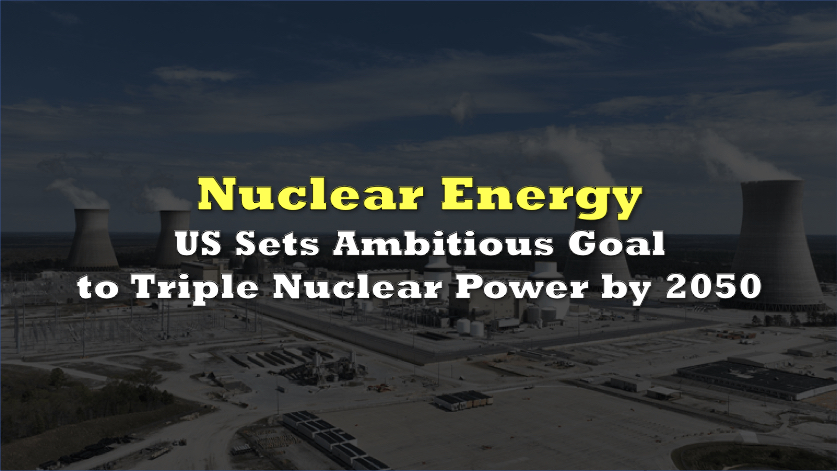

The Biden administration has announced a sweeping plan to triple the United States’ nuclear power capacity by 2050, aiming to add 200 gigawatts of carbon-free electricity through new reactor construction, plant restarts, and upgrades to existing facilities.
The plan sets an ambitious target: to have 35 gigawatts of additional nuclear capacity online within the next decade, eventually reaching 300 gigawatts by mid-century. This would represent a substantial increase over the current 100.6 gigawatts of nuclear power capacity, a figure dwarfed by the U.S.’s dependence on natural gas, which currently stands at over 576 gigawatts.

Ali Zaidi, the White House national climate adviser, highlighted the administration’s efforts to tackle long-standing obstacles to nuclear development, including workforce shortages, regulatory hurdles, and supply chain challenges.
 Sponsored · Antimony Resources
“Over the last four years, the United States has really established the industrial capacity and the muscle memory across the economy to carry out this plan,” Zaidi said. “We’ve taken out a lot of the impediments that have stood in the way of going big on this source of carbon-free electricity.”
To realize its ambitious goals, the Biden administration’s plan outlines several strategic actions. A key priority is to streamline federal licensing procedures for new and large-scale reactors, including technologies that have yet to reach full commercialization, such as small modular reactors (SMRs) and microreactors. The administration also plans to extend tax credits for nuclear projects to provide long-term financial stability for developers and investors.
The roadmap suggests adding new reactors at existing nuclear sites, which would allow the U.S. to build on its existing infrastructure. Additionally, there is a proposal to deploy microreactors at military installations, a concept that could accelerate SMR development and provide isolated facilities with reliable power independent of the main grid.
The Biden administration’s nuclear ambitions come at a time of growing bipartisan support for atomic energy on Capitol Hill. In July, Congress passed legislation that expanded the U.S. Nuclear Regulatory Commission’s (NRC) ability to regulate advanced reactors, approve new fuel sources, and evaluate manufacturing breakthroughs that could make nuclear builds faster and more affordable.
 Sponsored · Granada Gold Mine
U.S. President-elect Donald Trump, who has voiced strong support for nuclear energy, emphasized in his campaign trail the need for new reactors to support America’s growing data centers and industrial facilities, both of which require consistent, high-output electricity.
The recent drive for nuclear expansion is fueled in part by rising energy demands from high-tech and data-driven industries, which require dependable, low-emission power. In September, Microsoft Corp. (NASDAQ: MSFT) signed an agreement to source power from a revived reactor at the infamous Three Mile Island nuclear plant in Pennsylvania. Other tech giants, including Alphabet Inc.’s (NASDAQ: GOOGL) Google and Amazon.com Inc. (NASDAQ: AMZN), have also expressed interest in nuclear energy as a dependable source for their energy-intensive operations.
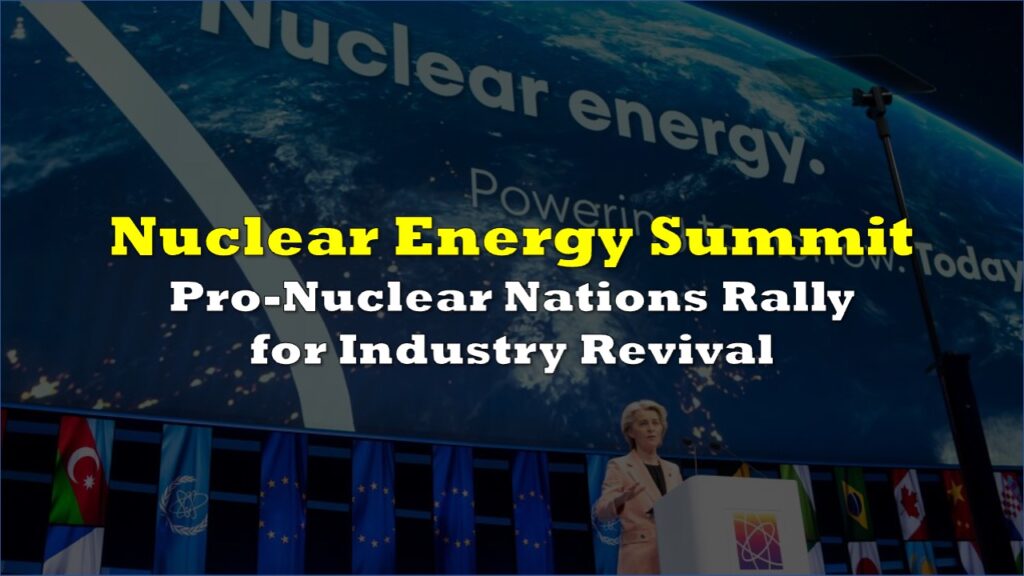
The Biden administration’s nuclear expansion plan also reflects a renewed focus on international competition in clean energy technologies. The U.S. joins approximately two dozen other nations that, at last year’s United Nations climate conference, committed to tripling their nuclear power capacities by 2050.
Nuclear energy has long been a contentious topic, with safety concerns following the 2011 Fukushima disaster in Japan casting a shadow over the industry. However, with improved safety standards and evolving technology, the tide has turned, and many governments are revisiting nuclear as a viable clean energy source.
The International Energy Agency notes that while nuclear capacity has stagnated over the last decade, renewables like solar and wind have surged. Even so, nuclear power’s reliability and high output make it indispensable for nations pursuing aggressive decarbonization.
Information for this story was found via Bloomberg and the sources mentioned. The author has no securities or affiliations related to the organizations discussed. Not a recommendation to buy or sell. Always do additional research and consult a professional before purchasing a security. The author holds no licenses.