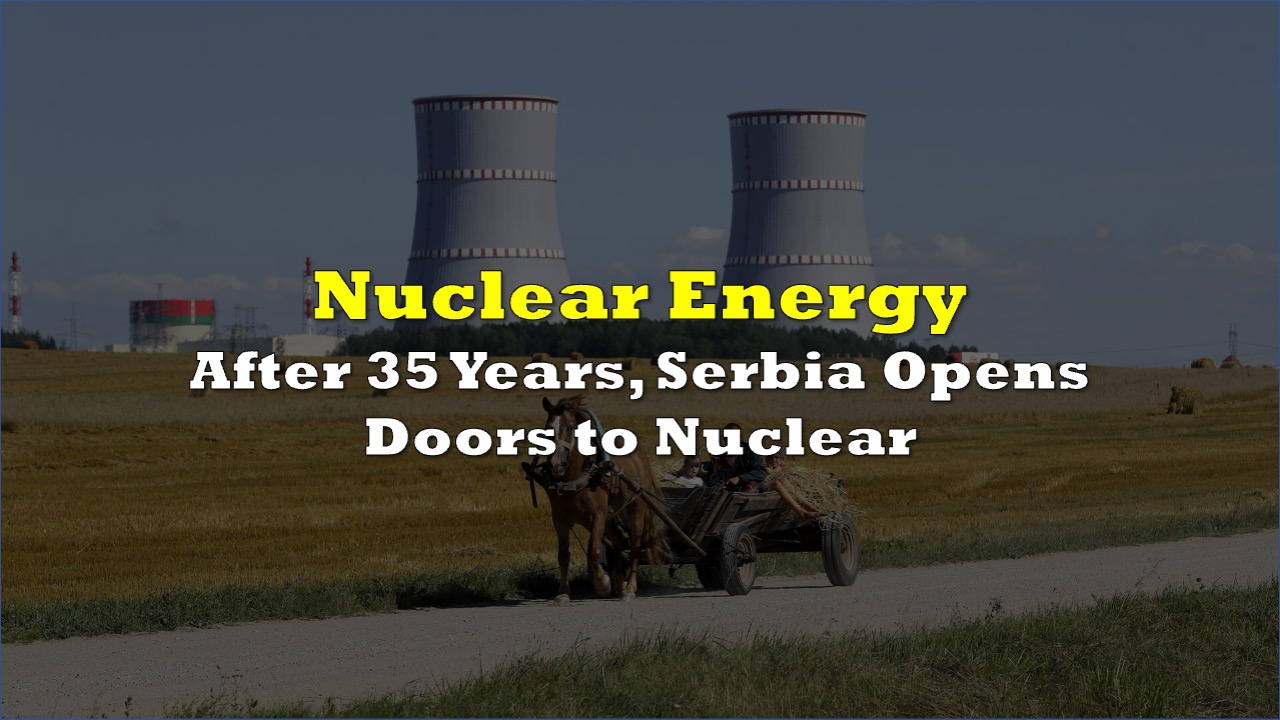

Serbia’s parliament has voted to end its long-standing moratorium on nuclear power development. The decision, announced by Energy Minister Dubravka Djedovic Handanovic, overturns restrictions that had been in place since the aftermath of the 1986 Chernobyl disaster.
The ban was originally implemented by former Yugoslavia, which had suspended its nuclear program and shut down its sole research reactor near Belgrade. This latest move comes as Serbia faces pressure to decarbonize its energy sector, particularly with the European Union’s 2050 deadline to phase out coal power.
Currently, Serbia heavily depends on coal for its energy needs, contributing to severe air pollution that has made its capital, Belgrade, one of the most polluted cities during winter months. However, the transition to nuclear power is expected to be a complex undertaking. According to a recent government study, establishing a new nuclear facility could take up to two decades.
 Sponsored · Emerita Resources Corp.
In March, President Aleksandar Vučić announced at the Nuclear Energy Summit in Brussels the country’s plans to develop 1.2GW of nuclear capacity using small modular reactors. The ambitious project faces several challenges, including an estimated €8 billion price tag and the need for international support.
“Today it is important that we understand how far behind we are and how we made wrong decisions in the previous 35 and 40 years. The importance attached to this summit indicates to us how much electricity we will lack in the future. To simplify, without nuclear energy we will not be able to survive the arrival of artificial intelligence or electric cars,” he said at the Nuclear Energy Summit.
Currently, Serbia heavily depends on coal for its energy needs, contributing to severe air pollution in Belgrade. While the country faces EU pressure to phase out coal by 2050, the transition to nuclear power is expected to be complex. Government studies suggest establishing new nuclear facilities could take up to two decades.
Information for this story was found via the sources and companies mentioned. The author has no securities or affiliations related to the organizations discussed. Not a recommendation to buy or sell. Always do additional research and consult a professional before purchasing a security. The author holds no licenses.