
Quebec will receive $13.9 billion in federal equalization payments next year while maintaining electricity rates roughly half those paid by Ontario consumers, intensifying regional tensions over Canada’s wealth redistribution system.
Residential electricity rates in Montreal average approximately 8 cents per kilowatt-hour, compared to 15 cents in Toronto and 12 cents in Vancouver, according to Hydro-Québec and government data.
For a household consuming 1,000 kilowatt-hours per month, Quebec residents typically pay around $80, while Ontario consumers face bills of nearly $151, and British Columbia residents pay approximately $126, based on rate structures from Hydro-Québec, the Ontario Energy Board, and BC Hydro.
 Sponsored · Canadian Copper Inc.
The price disparity amplifies tensions over Canada’s equalization program, through which Quebec receives $13.9 billion in federal transfers for fiscal year 2026-27 — nearly half of the $27.2 billion distributed nationally, according to Department of Finance Canada.
Critics argue Quebec’s ability to maintain low electricity rates stems partly from federal transfers funded by all Canadian taxpayers. The Fraser Institute contends the equalization formula inadequately accounts for Quebec’s hydroelectric wealth when calculating provincial fiscal capacity.
Quebec could generate substantially more revenue by charging market rates for electricity, yet the equalization formula calculates fiscal capacity based on actual resource revenues rather than potential revenues at market prices.
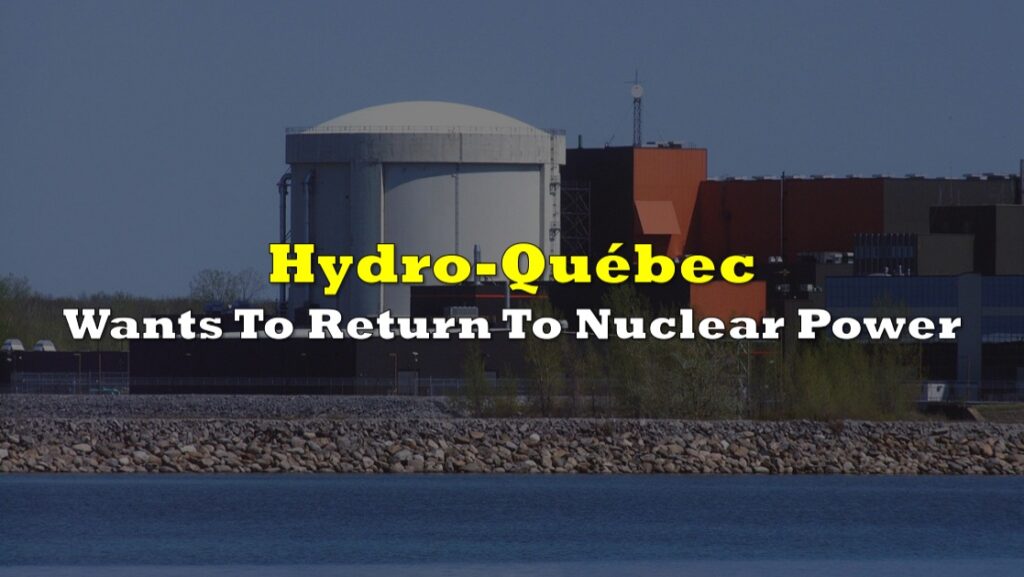
The low costs derive from extensive hydroelectric development managed by Hydro-Québec, a provincial crown corporation. The utility increased rates by 3% in April 2025, maintaining rates at 6.972 cents per kilowatt-hour for the first tier of consumption.
 Sponsored · PTX Metals Inc.
Hydro-Québec maintains that its residential rates remain the lowest in North America and have grown more slowly than inflation over five decades.
Ontario’s electricity system relies more heavily on nuclear generation. The Ontario Energy Board announced in October 2025 that supply costs would increase 29%, driven by nuclear expenditures and budget shortfalls. Time-of-use rates now range from 9.8 to 20.3 cents per kilowatt-hour.
British Columbia announced a 3.75% rate increase effective April 2025, bringing residential rates to approximately 12 cents per kilowatt-hour. Alberta’s Rate of Last Resort stands at 12.01 to 12.06 cents per kilowatt-hour for 2025-2026.
Canada’s Constitution enshrines equalization payments, requiring Parliament to ensure provincial governments possess sufficient revenues to deliver reasonably comparable services at reasonably comparable taxation levels.
Quebec Premier François Legault recently acknowledged the importance of federal transfers, stating in December that Quebec separation would be economically risky given the incoming equalization payments.
Alberta Premier Danielle Smith and Newfoundland and Labrador’s government have called for equalization reform. Alberta voters supported removing equalization from the Constitution in a 2021 referendum, though provinces lack unilateral authority to amend constitutional provisions.
Western provinces — Alberta, Saskatchewan, and British Columbia — are again to receive no equalization payments, contributing to regional tensions over resource wealth distribution. Quebec receives the largest absolute payment primarily because of its population, representing nearly one-quarter of Canada’s total, according to Library of Parliament analysis.
The Fraser Institute has documented inconsistencies in the formula, noting it applies hypothetical tax calculations for Alberta’s absence of a provincial sales tax while, as mentioned earlier, not adjusting for Quebec’s below-market electricity pricing.
Information for this story was found via the sources and companies mentioned. The author has no securities or affiliations related to the organizations discussed. Not a recommendation to buy or sell. Always do additional research and consult a professional before purchasing a security. The author holds no licenses.