

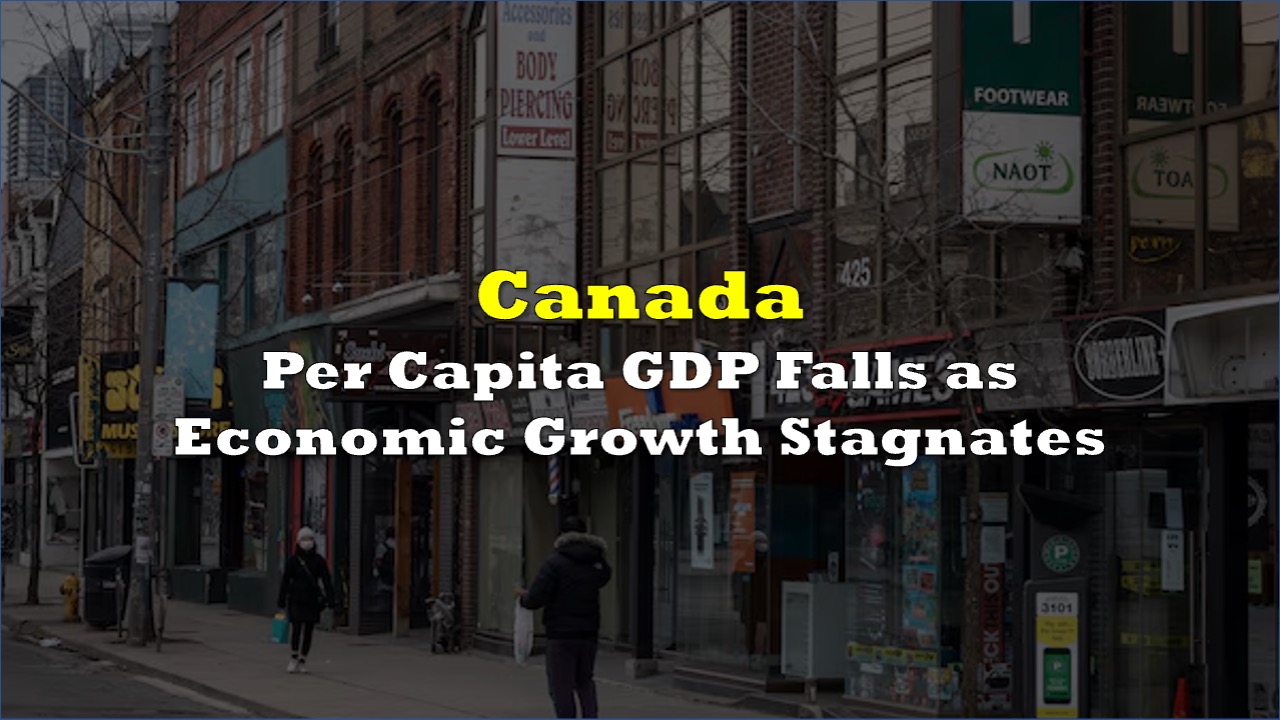

Canada’s real gross domestic product per capita declined 0.4% in the second quarter of 2025, extending a troubling pattern of economic underperformance that has left living standards below 2017 levels, according to official government data released in late August.
The decline followed a modest 0.4% increase in the first quarter, highlighting Canada’s struggle to generate meaningful economic growth on a per-person basis. Overall GDP contracted 0.4% in the quarter, driven primarily by steep export declines amid ongoing trade tensions with the United States.
Statistics Canada reported that exports fell 7.5% in the second quarter, with passenger vehicle exports plummeting 24.7% as US-imposed tariffs disrupted trade flows. Business investment in machinery and equipment dropped 9.4%, marking the weakest performance since 2016 outside of the pandemic period.
 Sponsored · Granada Gold Mine
The data underscores a broader economic challenge facing Canada. Per-capita economic output has contracted in five of the past six quarters and remains 2.5% below pre-pandemic levels, according to a Statistics Canada analysis published earlier this year.
University of Waterloo economist Mikal Skuterud has noted that Canada’s current per-capita GDP levels are comparable to those seen six years ago, highlighting the country’s stagnant economic trajectory over recent years.
The persistent weakness in per-capita growth reflects Canada’s inability to keep economic output ahead of rapid population expansion. The country’s population grew 3.2% in 2023, among the fastest rates in the developed world, while economic growth has struggled to keep pace.
Historical data shows Canada’s per-capita economic output has averaged 1.1% annual growth dating back to 1981. However, recent performance has left the metric about 7% below its long-term trend, equivalent to roughly $4,200 per person in lost economic output.
The economic headwinds include trade disruptions, weak productivity growth, and reduced business investment. Federal government revenue also declined 4.2% in the quarter following the removal of the federal carbon tax, contributing to increased government borrowing.
Information for this story was found via the sources and companies mentioned. The author has no securities or affiliations related to the organizations discussed. Not a recommendation to buy or sell. Always do additional research and consult a professional before purchasing a security. The author holds no licenses.






The West Needs To Level The Playing Field To Compete With China
Access to the raw materials of the new green economy is increasingly a high-stakes chess...