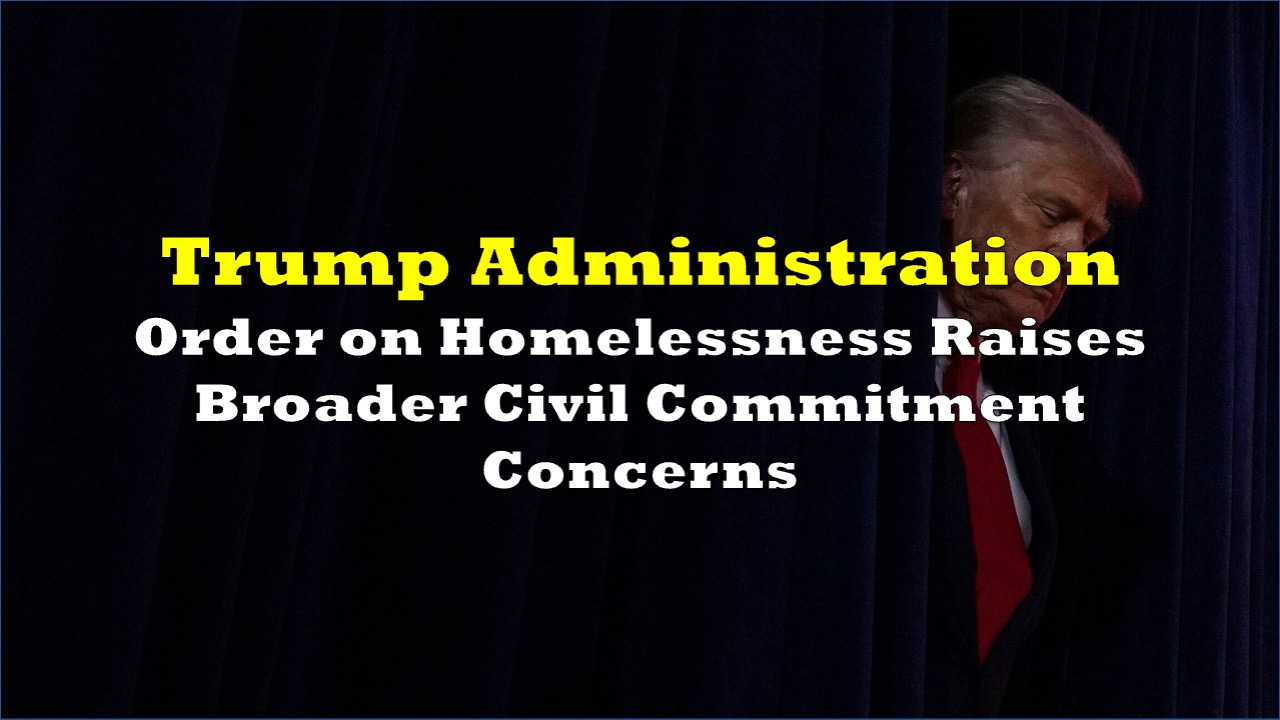

President Donald Trump’s executive order addressing homelessness has drawn criticism not just for its policy shift, but for language that civil liberties advocates say could dramatically expand government power to commit individuals beyond the homeless population forcibly.
While the July 24 order ostensibly targets street encampments, legal analysts and advocacy groups warn its broad language could create a framework for involuntary commitment of anyone deemed “a danger to themselves or others” or unable to “care for themselves.”
The directive instructs Attorney General Pam Bondi to actively seek reversal of court precedents and consent decrees that currently limit states’ civil commitment authority. Critics argue this could dismantle decades of legal protections established after historical abuses of psychiatric institutionalization.
 Sponsored · First Phosphate Corp.
Critics argue the order’s language extends far beyond homeless individuals, potentially applying to anyone authorities deem mentally ill or unable to care for themselves.
The order calls for “shifting homeless individuals into long-term institutional settings for humane treatment through the appropriate use of civil commitment.” However, terms like “appropriate facilities” and “appropriate periods of time” remain undefined, leaving broad discretionary power to local authorities.
The order could benefit private detention companies, as it creates demand for institutional facilities to house people subjected to civil commitment.
Advocates have raised concerns about historical misuse of civil commitment authority. “Civil commitment is a legal process where a person with a mental illness can be required to receive mental health treatment, even if they don’t want it,” according to mental health policy experts, noting it’s typically used when someone is deemed dangerous.
The order is a departure from the Housing First approach that has guided federal policy for two decades. Instead of prioritizing immediate housing, the new policy emphasizes treatment requirements and allows expanded involuntary commitment.
 Sponsored · Power Metallic Inc.
“Endemic vagrancy, disorderly behavior, sudden confrontations, and violent attacks have made our cities unsafe,” the order states, citing 274,224 people living on streets during the Biden administration’s final year — the highest number recorded.
The directive also cuts funding for harm reduction programs and requires grant recipients to enforce camping bans and drug use prohibitions.
The National Homelessness Law Center called the order “rooted in outdated, racist myths” and said “forced treatment is unethical, ineffective, and illegal.” The organization argued that “people need stable housing and access to healthcare.”
“The safest communities are those with the most housing and resources, not those that make it a crime to be poor or sick,” said Jesse Rabinowitz, the center’s communications director.
The executive action builds on a 2024 Supreme Court decision allowing municipalities to prohibit street sleeping regardless of available shelter space. Since that ruling, local governments have enacted numerous camping restrictions across the country.
Housing First, implemented nationally in 2004 under President George W. Bush, aimed to stabilize people in permanent housing before addressing underlying issues like addiction or mental illness. Research has generally supported the approach’s effectiveness.
Trump campaigned on promises to clear homeless encampments and move people into treatment facilities built on government land. The president has already ordered encampment sweeps in Washington, DC, and established a center for homeless veterans.
Critics warn the order’s impact could extend far beyond homelessness policy. The broad language about civil commitment, combined with efforts to overturn protective legal precedents, has raised concerns about potential expansion of involuntary institutionalization.
Federal data shows homelessness affected more than 770,000 Americans in 2024, marking an 18% rise from the prior year — the steepest increase since tracking began in 2007.
Information for this story was found via the sources and companies mentioned. The author has no securities or affiliations related to the organizations discussed. Not a recommendation to buy or sell. Always do additional research and consult a professional before purchasing a security. The author holds no licenses.